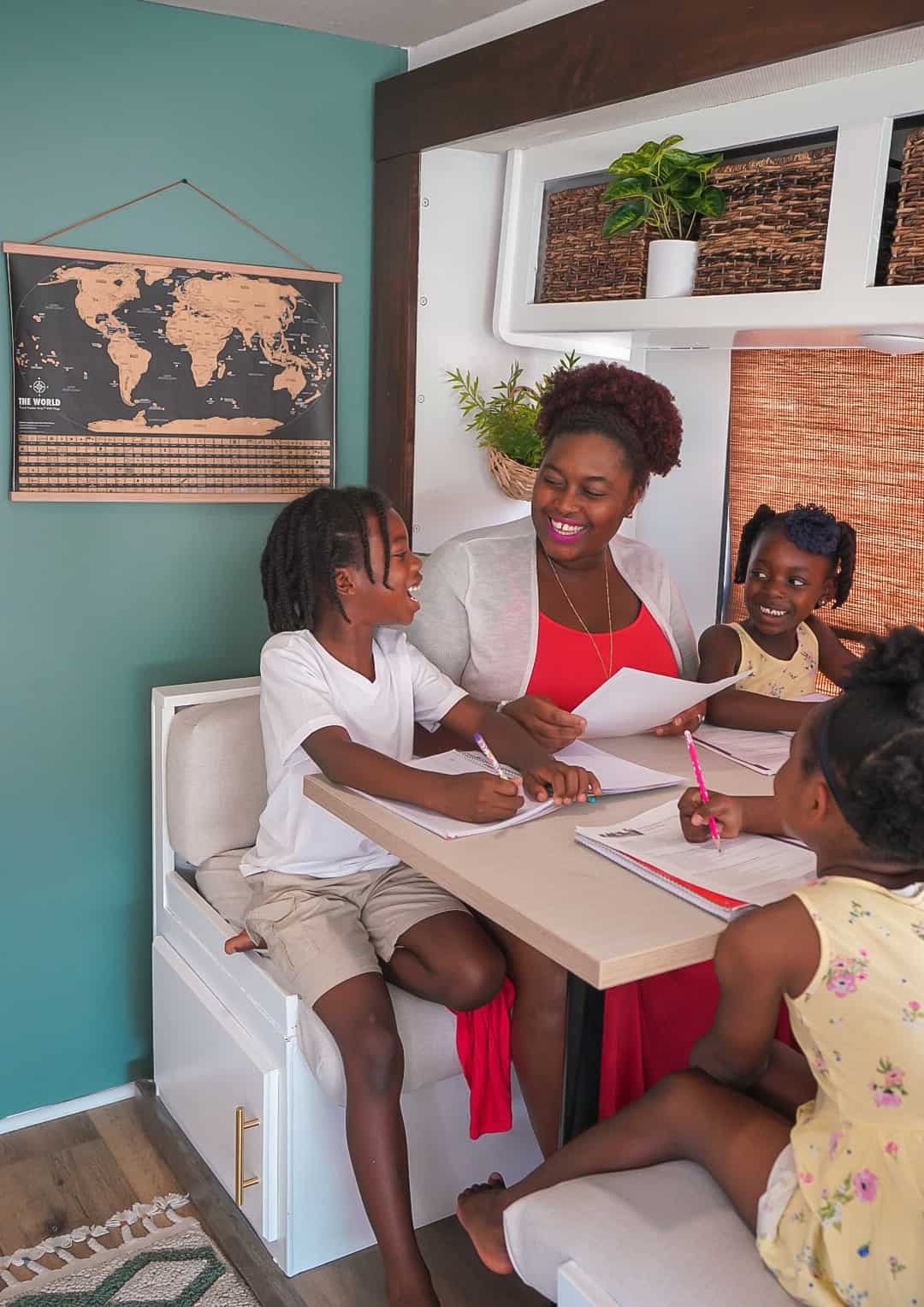
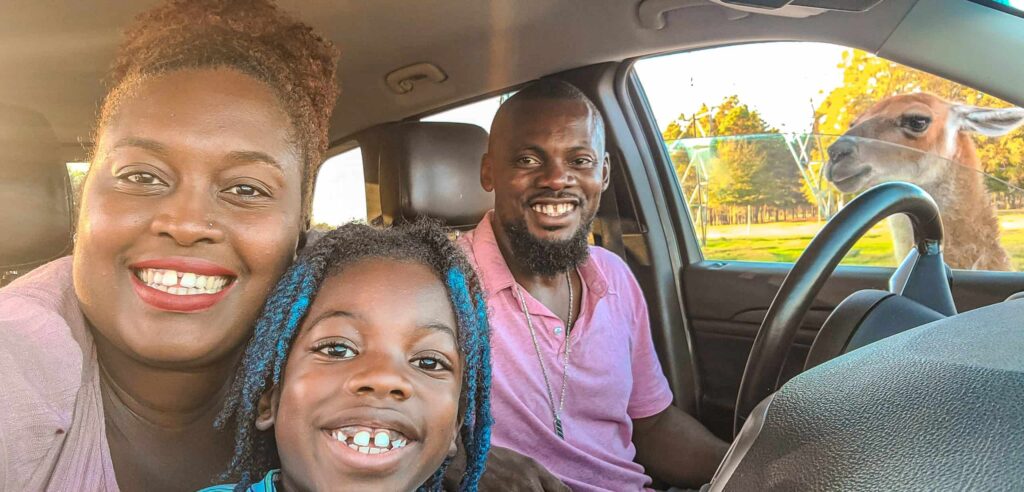
The travel lifestyle initially appealed to single, people without families who could easily pack a bag overnight and embark on their next adventure.
However, recently more families are traveling together with parents taking their children on trips. With most people embracing this travel lifestyle with their children, they have to find a way to educate or road school the kids while on the road.
Road Schooling makes it possible for traveling families to be able to travel and learn while on the go.
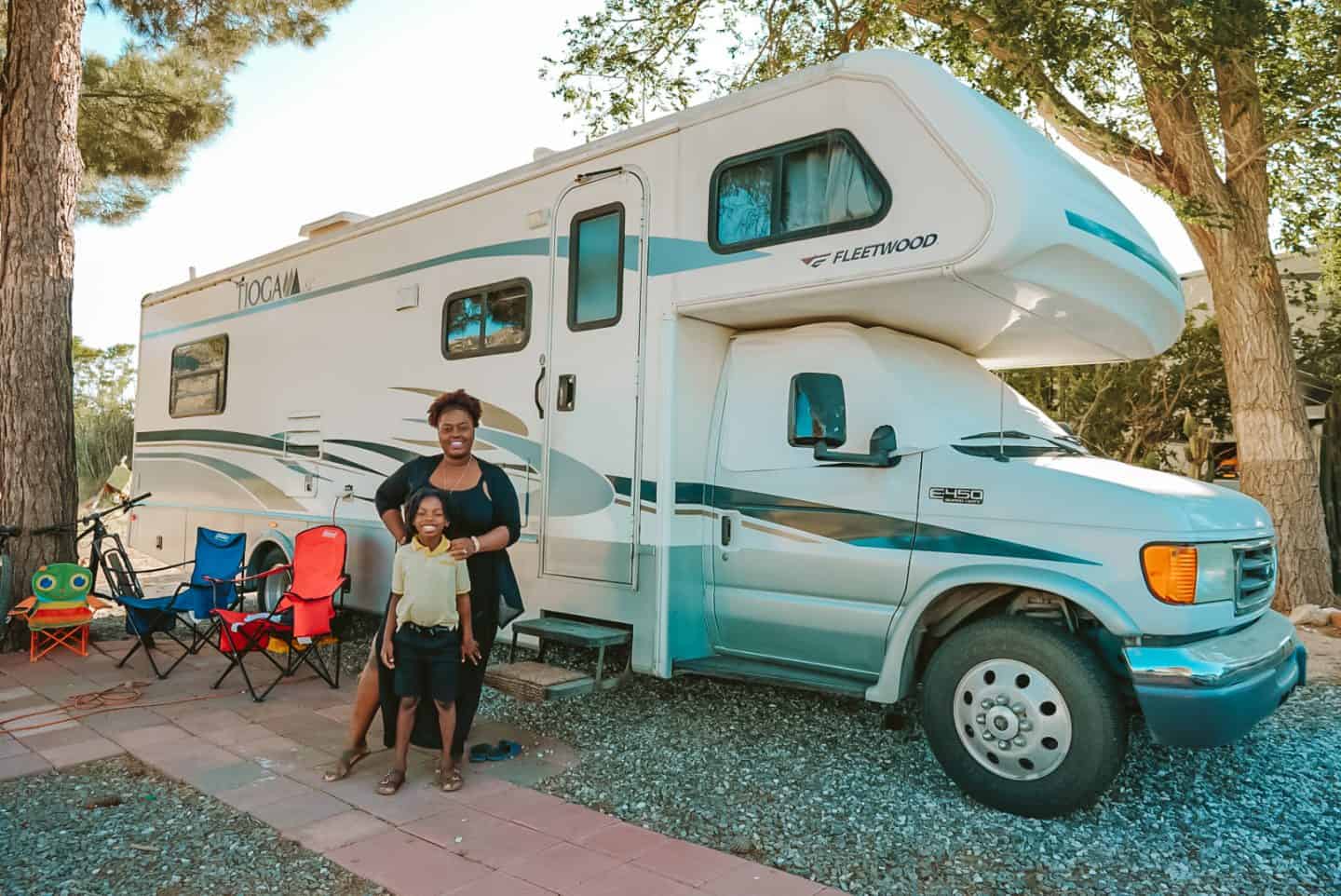
Selling our home and hitting the road in our RV has made it possible for our family to road school and explore every single U.S. state and all it’s territories as well while we are at it.
What Is Road Schooling?
Road schooling is educating kids while on the road. Unlike homeschooling, road schooling involves learning while on the move.
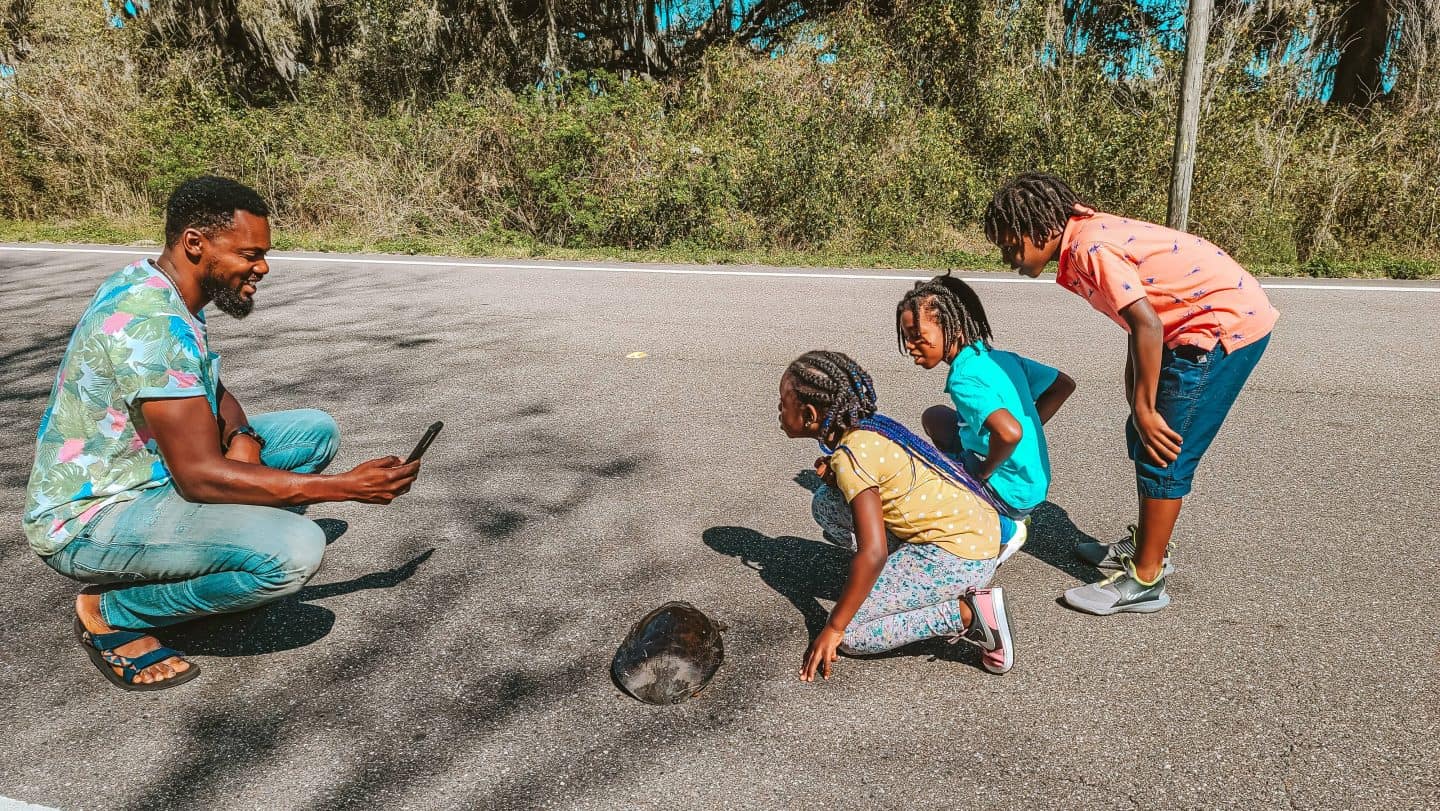
Road schooling involves practical lessons for traveling families such as:
- Visiting museums, historic sites, monuments
- Exploring different places and learning the diverse cultures
- Seizing every opportunity as a learning curve
- Putting to practice all the five senses to learn or relate to a theoretical lesson
Road schooling is in more ways similar to homeschooling but instead of being in one place, you are constantly traveling, basically as travelling homeschoolers.
Who is Road Schooling Ideal For?
If you are looking to get started with the travel lifestyle, how to educate your children is a major deciding factor. Every parent wants the best education available for their child.
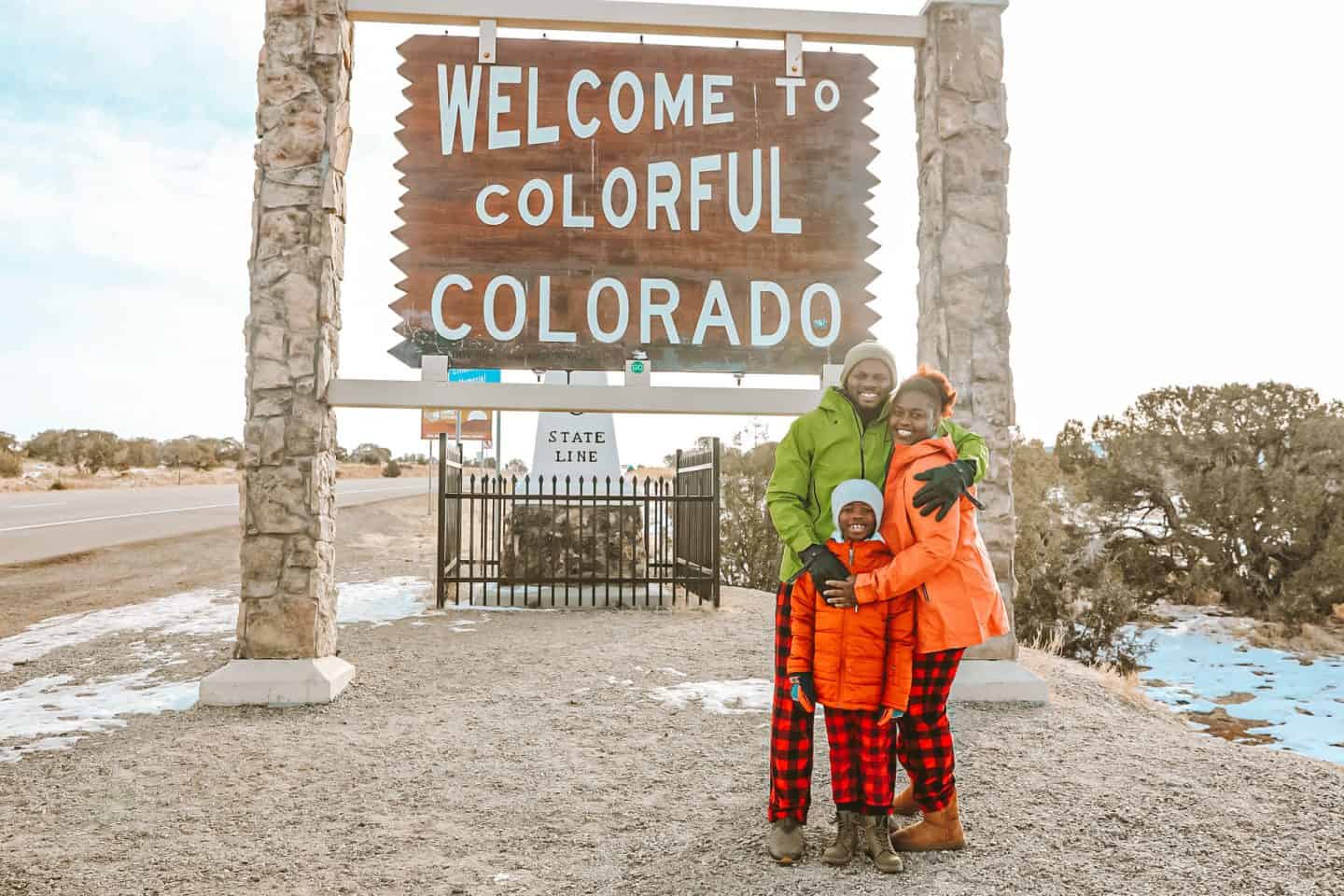
While it can be perceived as a distraction to move your child from one place to another, it really isn’t. Children tend to adapt very well and road schooling can also be the best thing for them.
Road schooling is for:
– Parents looking to create a travel lifestyle with their children.
– Parents yearning to give their children more than the ‘Classroom’ experience.
– Parents who understand they can incorporate education into their travel plans and do not necessarily need to give up their travel dreams in favor of education for their children.
– Parents who can work remotely or generate an income through travel to sustain their family needs.
– Parents who can effectively plan their schedule to include learning time.
– Parents who are ready to take up an educator role and be their children’s’ learning source.
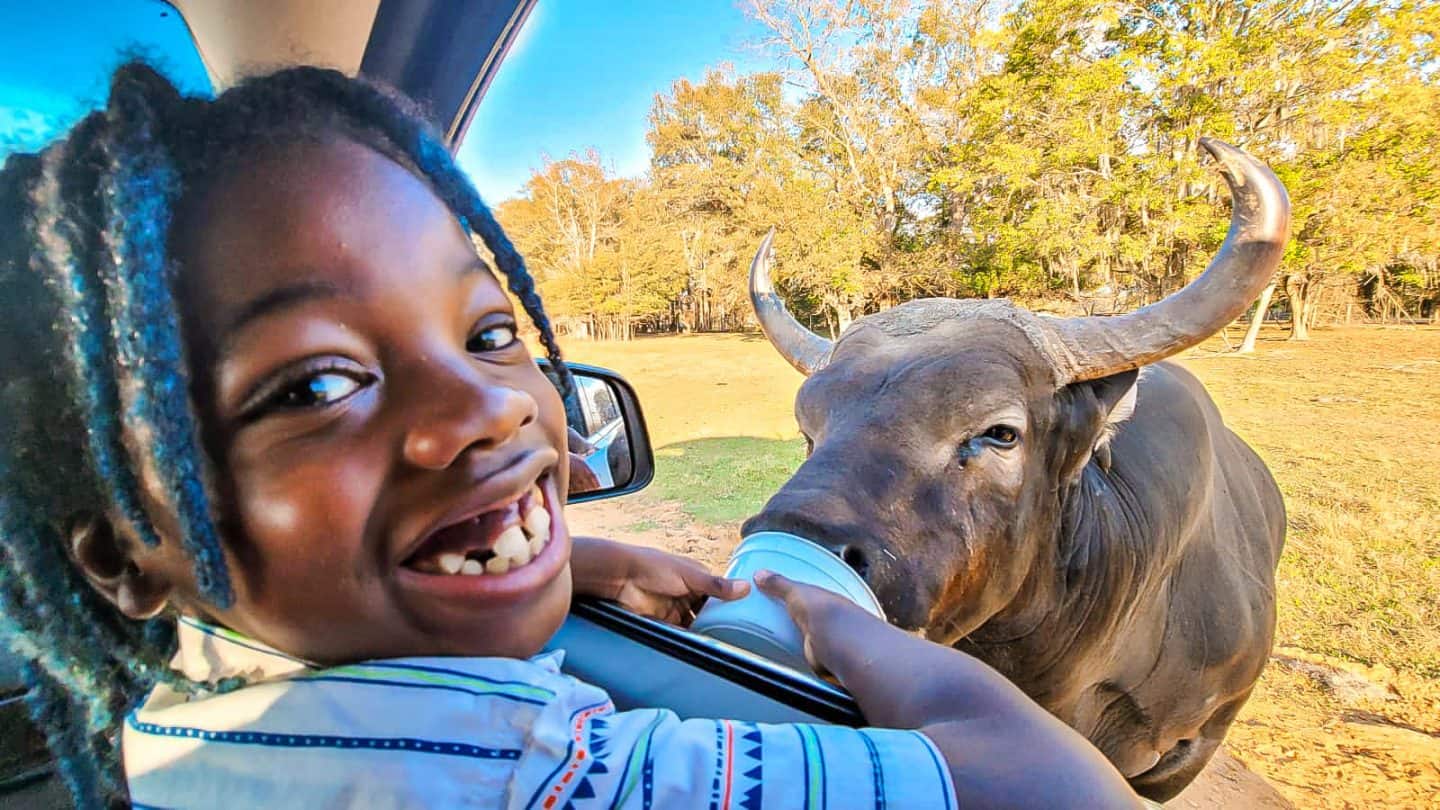
– Parents who understand that curriculum extends beyond the classroom and books.
– Parents who seek to instill religious teachings in their children and are concerned about the usual school environment.
– Traveling families who are ready to show their children the world.
– Most of the things above can be pre-planned to allow for effective implementation. Before getting into road schooling, there’s a lot of preparation for both the kids and the parents.
How To Homeschool Your Kids On The Road
a.k.a. Road School
Before getting your kids started on road schooling, it’s important to understand the laws guiding homeschooling in your state.
Each state has different guidelines on homeschooling; some are lenient while others are a bit stringent. So you can choose to observe the guidelines of your current state or select a ‘home base’ state that’s lenient to your needs.

Some of the general state guidelines you will be looking into are:
- Laws on how to withdraw your child from school
- Compulsory subjects, testing, and requirements
- Homeschooling resources and curriculum
- Special education provisions for each state
- Public school access for homeschoolers especially on extra curriculum activities
- Homeschooling options available in your state
- Record-keeping requirements and end of year assessments
To get accurate information on homeschooling requirements, you can visit or contact Home School Legal Defense Association. Besides state regulations, there are available resources online for homeschoolers.
Sites such as Time4Learning provide educative material that can be accessed on the web. In addition to online resources, parents can make use of libraries in places they visit to supplement their books and other resources.
As exciting as it sounds, road schooling is reliant on the parent as the teacher. As a parent, you will be 100% involved and also responsible for educating your child.
For parents already doing homeschool for their kids, the transition to road schooling is easy. However, first-time road schooling parents need to be prepare beforehand.

Road Schooling Steps
The key steps to getting ready as a road school parent are:
1. Connect with other homeschool parents
A conversation with parents’ road schooling their kids is resourceful in answering some of the questions you may have.
From their experience, you can draw the pros and cons of road schooling, get a picture of the process, have an insight into the dos and don’ts.
This also helps you decide if road schooling is ideal for your family and how you can customize your schedule to balance education and travel.
You can connect with homeschooling parents on social media, through local organizations and advocacy groups such as contact Home School Legal Defense Association.
2. Identify a ‘home-based’ state and understand its guiding laws to homeschool
Each state has its set of requirements for homeschooling parents. Be sure to understand your resident state guidelines to homeschooling and adhere to these.
The four critical laws to be aware of are:
- How to notify relevant authorities on road schooling
- Laws on testing and examination
- Laws on record keeping
- Laws on interaction with other school going students and activities road schoolers can participate in.
3. Research and identify different learning techniques appropriate to your needs
Different learning techniques apply to each child at every learning stage. Techniques available include books, web services & online libraries, apprenticeship, one on one coaching.
Identify a teaching technique that works for both you and your kids at each educational stage.
4. Find a curriculum for your child
Most of the curriculum information is available online. Some curricula are free while others are paid.
To find your child’s curricula, you can check out my post about “How To Choose The Right Curriculum For Your Child” as well as visit sites such as Khan Academy & Curriki.
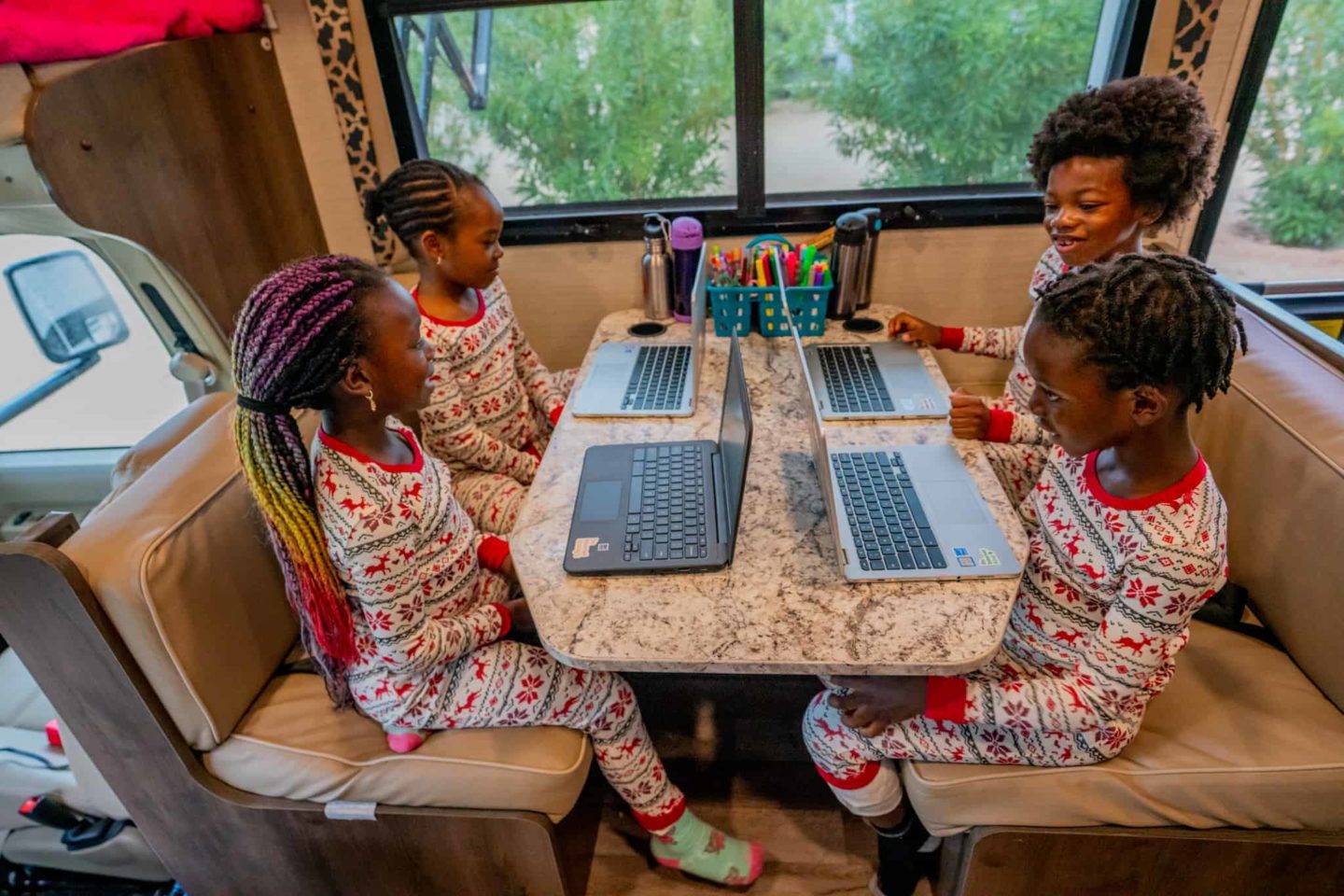
These two provide a free curriculum for all classes. If you are looking for reviews on homeschooling material, Cathy Duffy is a great site to check out reviews on different material.
5. Create a learning schedule or study plan as per your travel plans
While on the road, it’s easy to skip a study time or two depending on several factors.
As you plan your travel, allocate study time that’s sort of a routine to make it easy to adapt to.
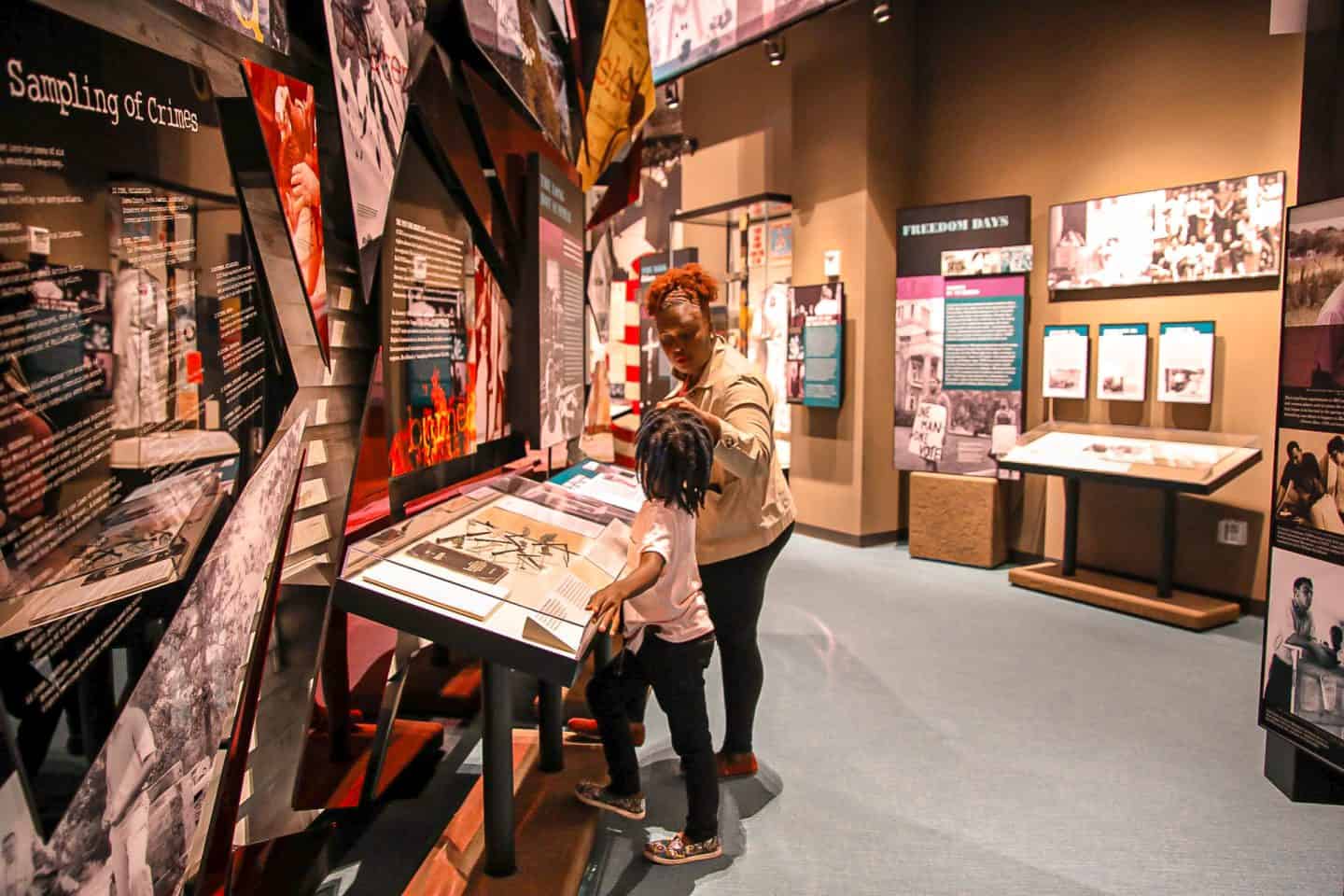
You can also plan to visit museums, historic sites, libraries to expand on the written information the kids read. The best part about road schooling is every minute is a learning opportunity.
It’s up to the parent to be keen and seize the learning opportunities throughout the travels. For instance, a stopover at a local coffee shop for a snack can be converted into a learning moment by going over the history of the town, its people, culture, and traditions.
You also want to make sure for web-based classes, you have made provisions for the internet throughout your travel.
6. Find a way to celebrate or award achievements for every milestone
Road schooling can be flexible in the sense the kids are not aware when they advance to the next stage of their education.
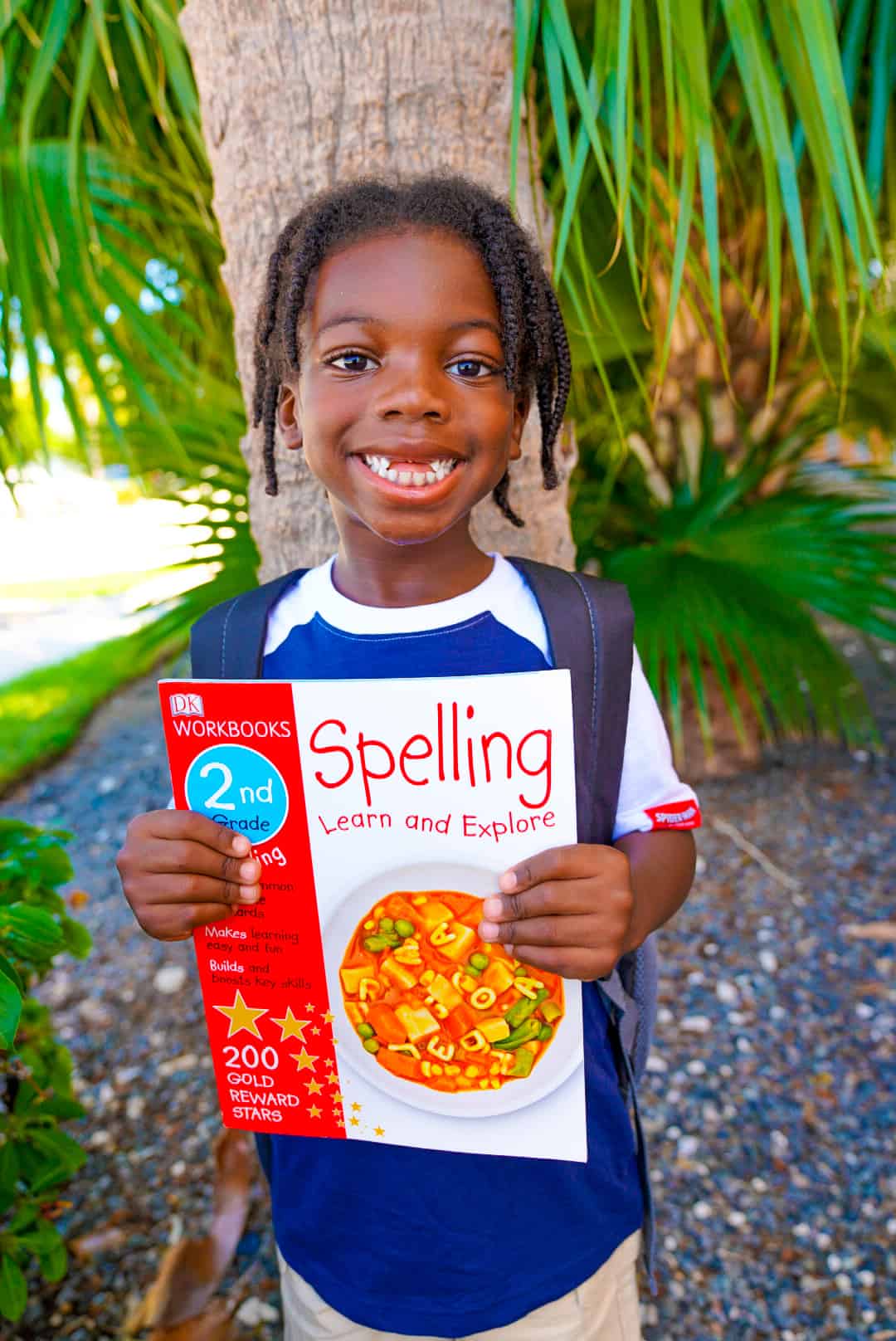
As a parent and tutor, you need to come up with a way to celebrate achievements and milestones for your child. This can be by displaying their artwork, celebrating their wins when they finally understand Algebra, or graduate from an internship or apprentice opportunity.
It is also important to keep the records of each advancement stage as these are necessary when applying for college.
Curious about how we do it? Here is exactly how we Roadschool / Homeschool / Worldschool as what we really do is a mix of everything.
My Top Pro Tips for Road Schooling
- When deciding on a curriculum for your child, Identify your child’s learning technique i.e. if Visual, auditory, or Kinesthetic. You can have your child take simple quizzes available online to determine their learning preference.
- Find a literature guided curriculum, get the teacher’s guide, and find the books from local libraries.
- Join social network communities for road schooling parents and gain access to resources, tips, and genuine reviews on everything road schooling.
Bottom Line on Roadschooling
You don’t have to interrupt your kids’ education to travel. You don’t have to wait to travel only during the school break.
Road schooling is effective and a great way for your children to learn life skills while gaining formal education.