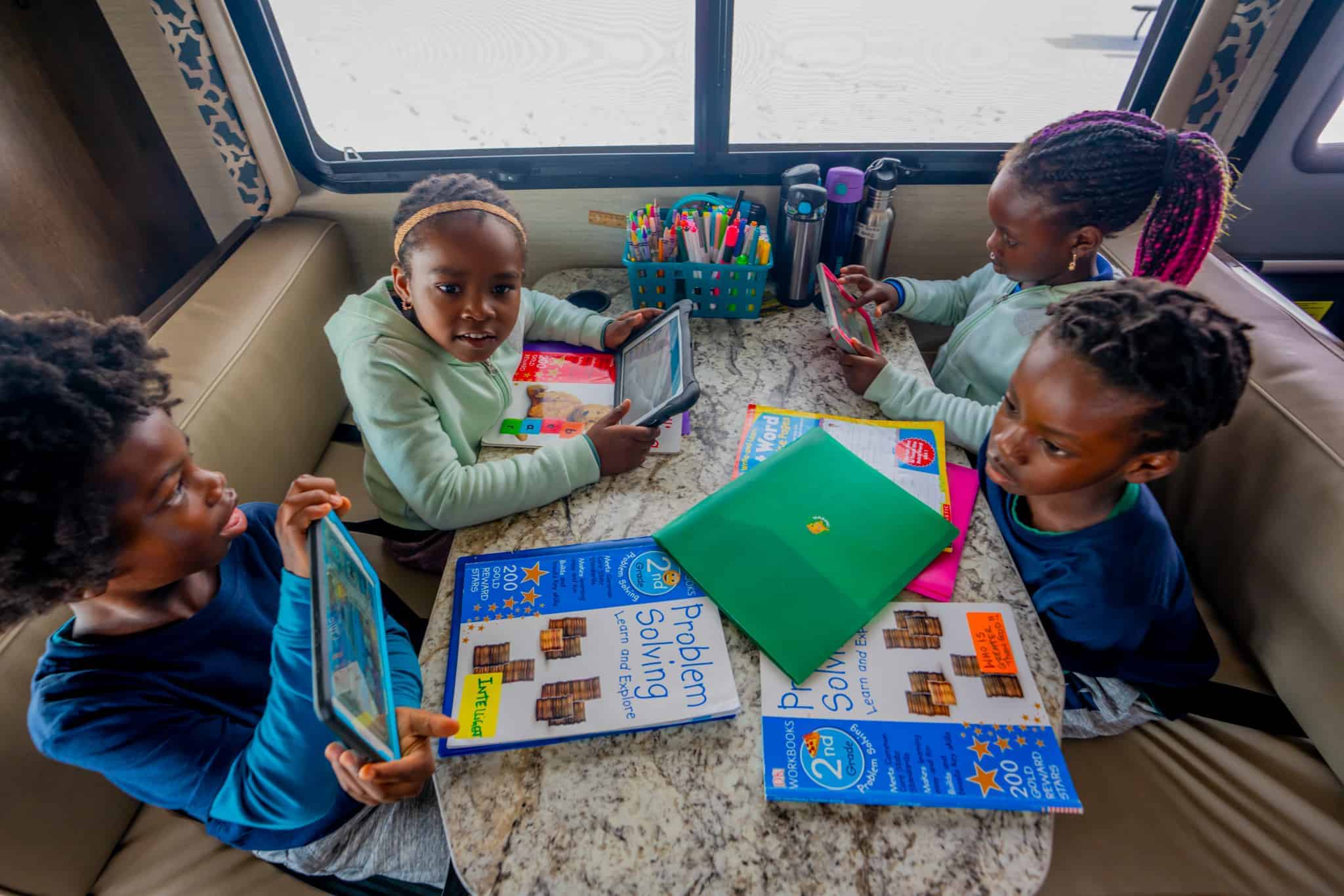
Choosing to homeschool your child is a big decision, and finding resources that reflect your family’s history, culture, and values can take time. When I started exploring homeschooling and worldschooling for Aiden, I wanted his education to include more than traditional lessons. I wanted him to learn about Black history and achievement, see himself represented in the books he read, and have opportunities to connect with people from different backgrounds.
For Black homeschooling families, that can mean looking for culturally relevant curriculum, books by Black authors, supportive parent communities, and experiences that make learning come alive beyond the classroom. It also means figuring out practical details such as state requirements, choosing a teaching approach, and building a routine that works for your child.
This guide brings together resources for families who already homeschool and those still deciding whether it’s right for them. You’ll find places to research the Black homeschooling experience, educational materials, community groups, and ideas for incorporating travel into your child’s learning.
Why Black Families Choose Homeschooling
Black families homeschool for different reasons. Some parents want more flexibility over the curriculum or daily schedule. Others want to respond to a child’s particular learning needs or make more room for Black history, literature, and cultural experiences. Families may also have concerns about racism or their child’s treatment at school.
These reasons are personal, and homeschooling is not the right answer for every family. What matters is finding an educational environment where your child can learn, feel supported, and develop confidence in who they are.
The statistics in the original version of this guide are now outdated. For historical context, the U.S. Census Bureau reported that, among households whose respondents identified as Black or African American, the proportion reporting homeschooling rose from 3.3% in spring 2020 to 16.1% in fall 2020. Those figures describe an unusual period during the pandemic, not the current homeschooling rate among Black children. For ongoing research, the National Center for Education Statistics publishes information about homeschooling participation and parents’ reasons for choosing it.
For me, one of the meaningful parts of homeschooling has been the ability to incorporate Black history, books with characters who look like my child, and learning experiences connected to our travels. I share more about the approach we’ve used in our homeschool, unschool, and worldschool curriculum .

How to Start Homeschooling Your Child
Before buying curriculum or setting up a classroom, find out what homeschooling involves in your state. In the United States, requirements differ depending on where you live. Some states require notices or educational records; others have different rules about instruction and assessment.
Start with your state’s education department and the U.S. Department of Education’s state-by-state homeschooling resources . Then think about your child’s learning needs, your family’s schedule, and how you’ll provide opportunities to learn and spend time with other children.
If you’re still exploring the idea, my article on the benefits of homeschooling shares what drew our family to home education. For families ready to begin, I’ve also written about how to homeschool in California and how to homeschool in Florida . Read the current state guidance alongside those articles because legal requirements and program names can change.
Choose an Educational Approach That Works for Your Child
Homeschooling doesn’t have to look exactly like a traditional classroom. Some families use a structured curriculum and timetable, while others combine formal lessons with projects, community classes, and child-led activities.
Our family has incorporated unschooling and worldschooling into Aiden’s education. In our case, that has meant following his interests, making learning materials available, and using travel as an opportunity to explore subjects in person. I’ve explained that approach in more detail in how to start unschooling .
You can also look at how children learn through play when planning activities for younger learners. Games, storytelling, building projects, and imaginative play can all have a place in a homeschool day.
Whatever approach you choose, make sure it meets the educational requirements where you live and gives your child appropriate support in reading, writing, mathematics, and other essential subjects.
Plan for the Cost of Homeschooling
You don’t need to buy every workbook, educational toy, or subscription box before you begin. Start with the essentials and add resources once you know what your child enjoys and needs.
Your local library, community programs, and free educational websites may help you keep costs down. Some families may also qualify for support through particular state or public education programs, depending on their enrollment arrangements and local rules.
I’ve written about California homeschool funding and addressed the question of whether parents get paid to homeschool . Check current program eligibility directly before including any funding in your family’s budget.
Articles About Black Homeschooling Families
When I first researched homeschooling, I wanted to hear from other Black families and understand why they’d chosen it. These articles offer different perspectives on culture, representation, educational experiences, and the freedom to choose a learning environment that works for a particular child.
The Radical Self-Reliance of Black Homeschooling explores the relationship between Black homeschooling and a longer history of families taking an active role in their children’s education.
Why More Black Parents Are Homeschooling Their Children examines families’ experiences with racial bullying and their reasons for choosing home education.
Black Families Increasingly Choose to Homeschool Kids features Black parents discussing their educational choices and experiences.
Other perspectives from the original resource guide include Why We Left Traditional School Systems to Practice Unschooling , The Freedom of Unschooling , Yes, Black People Homeschool Their Kids, Too , and Why More Black Parents Are Home-Schooling Their Kids .
For additional accounts, the original guide also featured Simone Biles’ experience with homeschooling , For Some Black Parents, the New Home Room Is Home , and 3 Reasons Why Black People Don’t Homeschool .
These pieces were published at different times and reflect their authors’ experiences and arguments. They’re useful for exploring perspectives, but no single family’s story can tell you what will work for your child.

Black family learning and spending time together
Books and Literature for Black Homeschooling Families
Books are one of the easiest ways to incorporate Black history, African cultures, and contemporary Black experiences into everyday learning.
I want Aiden to read about people who look like him across all kinds of stories—not only stories about slavery or discrimination, but also adventures, science, art, family life, and achievement.
Where to Find Books by Black Authors
EyeSeeMe African American Children’s Bookstore is a resource for finding books featuring Black children, families, history, and culture.
The African American Literature Book Club offers information about Black writers and literature across different age groups and genres.
Decolonizing Education Publishing focuses on educational materials that center Black and Brown histories, cultures, and experiences.
When choosing books, I look at my child’s reading level and interests first. A book about an inventor may lead to a science project, while a story set in another country can introduce geography, food, language, and history.
If you want to make conversations about race part of your family’s reading routine, my guide to resources for raising anti-racist children brings together books and other age-appropriate materials.
For a history-focused activity, you can also use the books and ideas in my guide to teaching children about Juneteenth .

Black homeschooling books and learning resources
Homeschool Curriculum and Educational Resources for Black Children
A culturally relevant curriculum doesn’t mean every lesson has to focus on race or history. I want Aiden to learn reading, writing, mathematics, science, and other essential subjects while also seeing Black people represented in what he studies.
You can build that balance by combining your main curriculum with additional books, videos, projects, and community classes.
African-Centered Curriculum and Learning Communities
Kamali Academy offers an Afrikan-centered educational approach and resources for families interested in culturally grounded learning.
Black Classical University was included in my original resource guide as a place to explore Pan-African educational ideas and community teaching. Review its current offerings before enrolling or purchasing materials.
Villaging Brown is another resource to explore for family learning, early childhood activities, and community-centered education.
For families interested in combining cultural learning with science, technology, engineering, art, and mathematics, Sankofa Science Solutions was also included in the original guide.
The African American Online Cooperative is a resource for families looking for shared learning opportunities and support.
These organizations have different educational approaches. Before choosing a program, review its current curriculum, age range, instructor qualifications, schedule, and cost to see whether it suits your child.

Science, Coding, and Hands-On Learning
Aiden has always enjoyed opportunities to learn by doing, whether that’s working on a project at home or discovering something new during our travels.
If your child likes science, you can supplement your curriculum with the resources in my guide to science YouTube channels for homeschool enrichment . I’ve also shared other ways we use YouTube to supplement our homeschool curriculum .
You don’t need expensive equipment to introduce science. You can start with age-appropriate experiments, library books, nature walks, and simple projects that invite children to ask questions.
For financial literacy, my budget worksheets for kids can help introduce saving, spending, and money management. Those lessons can also become practical activities when children help plan a family outing or compare prices at a store.
Subscription Boxes for Black Homeschooling Families
Subscription boxes can provide books, activities, and projects when you want something ready to use alongside your regular curriculum.
I wouldn’t make a subscription your entire homeschool plan, but a well-chosen box can introduce a subject your child wants to explore further.
The following services were included in the original guide. Check their current availability, age recommendations, prices, and subscription terms before ordering.
Legacy Kits offers a starting point for exploring history through books and hands-on learning activities.
Just Like Me! Box was created to introduce children of color to books featuring characters and stories that reflect their experiences.
Brown Toy Box focuses on representation and STEAM learning, with materials intended to help children explore different interests and career possibilities.
Kokumo was included in the original guide for its approach to African history and science-related learning.
The Because of Them We Can Box introduces children to Black historical figures, organizations, and achievements through themed educational materials.
Show your child a few options before subscribing. A book box might be useful for a child who loves reading, while a hands-on project kit may be more engaging for someone who prefers building and experimenting.
Homeschool Groups and Support for Black Families
Homeschooling doesn’t mean you have to organize every lesson, outing, and social activity by yourself.
Connecting with other parents can help you find local classes, arrange playdates, share curriculum ideas, and learn how other families approach challenges.
One organization to explore is National Black Home Educators , which provides information and community resources for Black homeschooling families.
The original guide also included Liberated Minds Expo as a resource for families interested in alternative and culturally grounded education. Check whether its current events or programs are available before making plans.
Facebook Communities for Black Homeschoolers
Facebook groups can be useful when you’re looking for other parents who understand your questions and experiences. They can also help you find families in your area who are interested in field trips or group learning.
Groups included in my original resource guide include Black Homeschooling Families Support , African American Unschoolers , The Black Homeschoolers Connection , and Black Homeschool Families .
You can also explore African American Homeschool Moms , Homeschooling Black Families , African American Home School Network , and Homeschooling for Black Freethinkers .
For families interested in particular subjects or learning approaches, the original guide listed African American STEAM Club , African American Online Cooperative Official Members Group , and Melanin Books 4 Melanin Kids .
If travel is part of your family’s homeschool plans, look into Black Homeschoolers Traveling Together and the Black Kids Do Travel Facebook community .
Some groups may have changed names, become private, or stopped accepting new members since I first compiled this resource guide. Review their current activity and community rules before joining.
Help Your Child Build Friendships Outside the Home
I make a point of giving Aiden opportunities to meet other children through activities, travel, and community experiences.
Your family might join a local co-op, visit the library, enroll in a sports program, volunteer, or arrange regular playdates with other homeschoolers.
When we visited Chicago with kids , children’s museums and other local attractions gave us opportunities for hands-on learning outside our usual environment. You don’t have to travel far to do something similar. A museum, park, or community event in your own city can become a homeschool field trip.

Travel and Worldschooling for Black Homeschooling Families
Travel has been an important part of how our family learns. When we visit a new place, Aiden can explore its history, geography, food, and culture through experiences rather than only reading about them.
Worldschooling doesn’t require international flights or months away from home. A day trip, museum visit, neighborhood walk, or conversation with someone from a different background can become an opportunity to learn.
The Black Kids Do Travel community was created to encourage Black families to explore the world with their children and share their experiences.
Learn About History and Culture Through Travel
A trip can help bring a lesson to life when you prepare your child beforehand and give them space to ask questions afterward.
For example, our family trip to Ghana included visits to historical landmarks where Aiden learned about Ghana’s history. My guide to things to do in Ghana with kids offers additional ideas for incorporating history, culture, markets, and nature into a family itinerary.
Not every educational trip needs to center on a major historical site. When we visited Copenhagen with kids on a budget , simply navigating a new city gave us opportunities to discuss transportation, geography, and everyday life.
You can also use travel to introduce languages and local customs. Our 48 hours in Singapore with kids became part of a longer Southeast Asia adventure, while our time in Phuket with kids included a short-term school experience that let Aiden spend time learning alongside other children.
For another example of how children can learn through everyday experiences abroad, read about our family trip to Tokyo .

Turn Outdoor Adventures Into Lessons
Nature trips can introduce science, geography, wildlife, and conservation without making the experience feel like a formal class.
During our trip to Sequoia National Park with kids , we visited the Giant Forest Museum and picked up Junior Ranger activities. When we went camping in Yosemite , time outdoors gave the kids more opportunities to explore, observe, and ask questions.
Our family visit to Zion National Park is another example of how an outdoor adventure can introduce children to landscapes they may previously have seen only in books.
If you want to incorporate geography into your homeschool routine, invite your child to keep a map or journal of places they’ve visited. Our family’s experience exploring different U.S. states with kids gave us plenty of opportunities to compare landscapes, landmarks, and local history.
You can also use the National Park Service Junior Ranger program to find educational activities for park visits.
Worldschooling Doesn’t Have to Be Expensive
You don’t need to travel full-time to include worldschooling in your child’s education.
Start with nearby museums, cultural festivals, historical sites, and community events. If you want to plan a bigger trip, choose a destination that fits your budget and identify one or two learning experiences your child will enjoy.
I’ve explained how we approach spending in How Are We Able to Afford Our Travel Life? . For families preparing to travel abroad, my ultimate guide to traveling internationally with kids covers practical planning considerations.
Books for Black Parents Interested in Homeschooling
If you’re still deciding how to approach home education, books written by homeschooling parents and education researchers can introduce different experiences and teaching philosophies.
The original guide included African Americans and Homeschooling: Motivations, Opportunities and Challenges , No Dream Deferred: Why Black and Latino Families Are Choosing Homeschool , and Homeschool Gone Wild .
Look for books that address the questions you actually have, whether those concern starting a homeschool, building a curriculum, supporting your child’s confidence, or organizing family life around learning at home.
I also recommend checking your library before buying every title. That gives you a chance to explore different ideas without committing to an entire collection of books.
Black Homeschool Blogs, Videos, and Podcasts
Sometimes the most useful advice comes from seeing how another family organizes its day.
Blogs and videos can provide ideas for activities, routines, reading materials, and ways to balance the responsibilities of parenting and teaching. However, every family’s situation is different, so use what is helpful and adjust it to fit your own home.
Black Homeschool and Worldschool Blogs
The original resource guide included The Married Mommy , The Fall Co Family , My Mommy Flies , The Mahogany Way , and The Black Homeschool as places to explore other families’ experiences.
It also featured Joy in the Ordinary , Hip Hop Homeschoolers , Christian Homeschool Moms , The Blessed Heritage Chronicles , African American Homeschool Moms , and Homeschooling in the D .
For worldschooling perspectives, the original collection included Our Kitchen Classroom , Doing Life Afraid , and Trippin’ Momma .
These were part of the original resource collection, and some may no longer publish regularly. Check their recent content and current availability before depending on an older recommendation or program.

YouTube Channels and Podcasts
If you prefer listening to other homeschooling parents or watching their day-to-day routines, video channels and podcasts can be another way to explore different approaches.
The original guide featured My Busy Bees and Me , Brown Mamas , UNschooling the Sensational Six , Literally Micah , Mom Zest , and From Syreena, With Love .
You can also explore Akilah S. Richards’ work on self-directed education and Girlfriend’s Guide to Homeschooling with Angela Jordan Perry .
Choose the resources that address your family’s interests rather than feeling you need to follow every creator or try every teaching method.
Frequently Asked Questions About Black Homeschooling Families
How Can I Include Black History in Our Homeschool Curriculum?
You can incorporate Black history throughout the year rather than limiting it to one month. Read books by Black authors, study historical figures and events, explore art and music, and visit relevant museums or cultural sites. Choose materials that celebrate Black creativity and achievement alongside lessons about difficult periods in history.
Do I Need an African-Centered Curriculum to Homeschool My Black Child?
No. You can use a general curriculum and supplement it with books, lessons, and activities that reflect your child’s culture and interests. Some families prefer a dedicated African-centered program, while others combine resources from several places. The important thing is to cover essential subjects and meet your local educational requirements.
How Can Homeschooled Children Make Friends?
Homeschool groups, co-ops, sports, library programs, community classes, and regular playdates can give children opportunities to build friendships. I also value the connections Aiden has made while traveling. You don’t have to organize every activity yourself; a supportive local community can make it easier to arrange social experiences consistently.
Is Homeschooling Expensive?
Homeschool costs vary depending on your curriculum, classes, supplies, and activities. Families can reduce expenses by using public libraries, free educational resources, shared materials, and community programs. Before purchasing a subscription or enrolling in classes, decide which resources your child needs and check whether any local funding programs apply to your educational arrangement.
Is Homeschooling Better Than Traditional School for Black Children?
There isn’t one educational arrangement that works best for every Black child. Families consider their children’s learning needs, school experiences, available support, and practical circumstances when deciding. Research about particular groups of homeschoolers does not establish that homeschooling will produce the same outcome for every child. Choose an approach you can support and reassess it as your child’s needs change.
Final Thoughts on Black Homeschooling Resources
One of the things I value most about homeschooling is the opportunity to help shape Aiden’s learning around his interests while making space for Black history, literature, and cultural experiences.
I’ve also learned that I don’t have to find every resource or figure out every part of homeschooling by myself. Books, educational organizations, other parents, community groups, and real-life experiences can all contribute to a child’s education.
If you’re just beginning, start with the requirements where you live and a few resources that match your child’s age and interests. You can expand your collection, try new activities, and adjust your approach as you learn what works for your family.
And if you’re already homeschooling, I’d love to hear about a book, curriculum, group, or organization that has helped your family. Share it in the comments so other parents can discover it too.