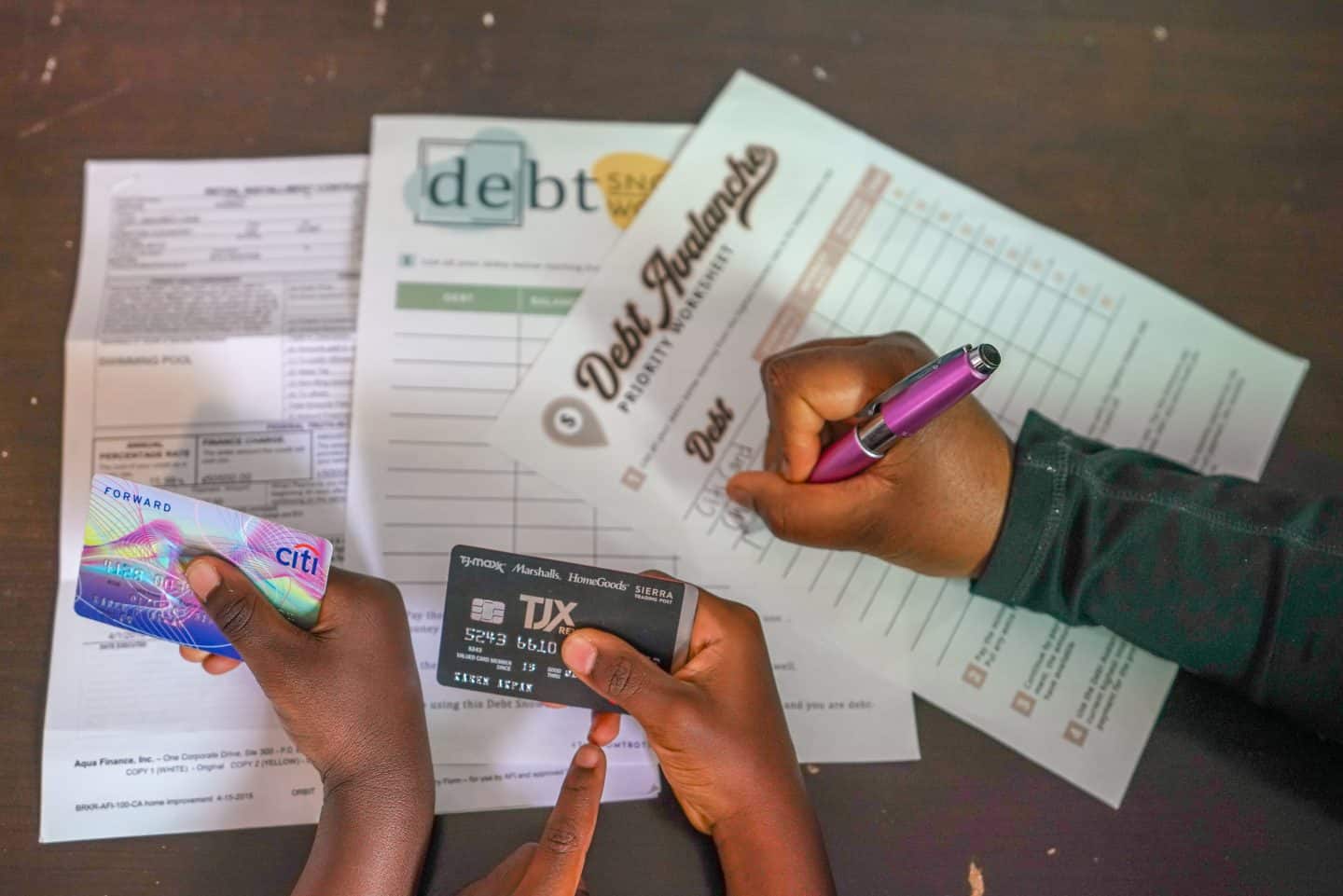

Paying Off Debt: The Debt Snowball vs Avalanche Method

This post may contain affiliate links. By clicking on any of the links below, I may get a commission if you make a purchase at absolutely no additional charge to you. This helps offset the costs of running this blog & I appreciate your support. Please see my privacy & disclosure policy for more.

When it comes to paying off debt, there are two ways of paying off debt that stand out; chances are you may have heard of them before: the debt snowball and the debt avalanche.

While you may have heard the terms, you may not be familiar with the intricacies of them. What sets them apart from one another? Which one is right for you? In this article, I’ll help you answer all these questions as we compare debt snowball vs avalanche.

What Is the Best Way to Approach Debt Snowball vs Avalanche?

  1. Start with debt snowball for quick, motivating wins.
  2. Switch to debt avalanche once momentum feels steady.
  3. List debts smallest to largest, and by interest rate.
  4. Automate every minimum payment so nothing gets missed.
  5. Choose whichever method your mindset will actually stick with.
Black Family Travel paying off debt debt snowball vs debt avalanche 2 1

What is the Debt Snowball?

The debt snowball is a method of debt repayment that has been made popular by Dave Ramsey over the last few decades. It focuses on the psychological aspect of paying off debt by giving you a boost in confidence and a win as quickly as possible. The idea is quite straightforward.

Begin by making a list of all your debts from the smallest to the largest, excluding your mortgage if you have one. This is now the order you will pay off your debt. Make the minimum payments for all of your debts each month, then focus any extra money you have on the smallest debt.

Once you’ve paid off that debt, you should have a small celebration; you paid off a debt, and you’re one step closer to financial freedom! Now that minimum payment and extra money you had going to your first debt can be moved on to the new smallest debt.
debt snowball vs avalanche

Now, the amount of money you have going towards paying off your debt has increased because you don’t have that old minimum payment. Once you’d paid off that second debt, you move on to the third, and once again the amount you’re putting towards the debt has grown.

This is why it is called the debt snowball. It’s just like making a snowman. You start with a small ball, then roll that around in the snow, making the ball bigger and bigger. Only this time, instead of snow you’re doing it with your money.

All along the way, you’re having small wins that help keep you stay motivated and stay on track. The debt snowball transforms debt from being a math problem to a mental exercise. This is the psychological side of the debt snowball vs avalanche in action.

So, to summarize the debt snowball:

  • Make a list of all your debts in order from smallest to largest (except mortgage)
  • Focus on paying off the smallest debt first, then working your way up
  • Celebrate your wins, which are coming more often
  • Can make paying off debt easier by making it feel more rewarding

Black Family Travel paying off debt debt snowball vs debt avalanche 1 1

What is the Debt Avalanche?

Where the debt snowball makes debt into a mental exercise, the debt avalanche makes it into a pure and simple math problem. Just like with the debt snowball, you want to make a list of all of your debts.

Only this time, instead of listing the debts from smallest to largest, you will want to list them in order of highest interest rate to lowest, once again excluding your mortgage if you have one.

Yes, you are going to need to work out what your interest rate is for each of your debts if you don’t already know it. You will want to work on paying off the debt with the highest interest rate first. This may mean that you have to wait longer for your first debt payoff win, but by doing it this way you will actually be saving yourself money in the long run.

This is what is considered to be the more conventional way of paying off debt. But it isn’t the best one for everyone. Dave Ramsey, a proponent of the debt snowball method, has said that if people were good at doing math, they wouldn’t be in debt.

While he does have a bit of a point, the debt avalanche method cannot simply be ignored because of the massive benefits it does have. This is the math-first side of debt snowball vs avalanche.

Black Family Travel money books for kids kid entrepreneur books kidpreneur books teach kids about business black kid millionaires black homeschool family black kids homeschool 40
Grab some books about Finance for your kids here – FINANCE BOOKS

So, to summarize the debt avalanche:

  • Make a list of all your debts in order of highest interest rates to lowest (except mortgage)
  • Focus on paying off the debt with the highest interest rate first, then working your way to the lowest
  • In the long run, you will save money
  • It will be easier to fall off track as you don’t have wins as often, and it can start to feel hopeless.

How Much Can Families Save With These Methods?

  1. Avalanche typically saves more total interest over time.
  2. Snowball often gets your first debt gone faster.
  3. Extra payments, even small ones, shrink both timelines fast.
  4. Our family paid off $200K in debt, student loans included.
  5. Either method can free up real money for travel.

Debt Snowball vs Debt Avalanche

So which one is better? Well, I can tell you now that the answer won’t be as clear as you hope it will be. The core of debt snowball vs avalanche really comes down to psychology versus math, and which one feels right to you.

When you come out of the other side, you’ll have paid less money to pay off those debts. But you could also fall off track, go back to your old habits, and give up on being debt-free. It is much more challenging, though, with its benefits.

With the debt snowball, on the other hand, you’ll have more wins, which will keep morale high and make it easier for you to keep going. You’ll see your success without having to wait for ages, and that does some very powerful things to your mind.

Black Family Travel paying off debt debt snowball vs debt avalanche 3 1
Talking to the kids about debt.

However, compared to the debt avalanche, you will end up spending more to pay off your debt because you aren’t paying off those debts with the high-interest rate, meaning you’re paying more interest. For some people, though, it might be worth that extra cost.

It means having peace of mind that debts are getting paid. That little motivational boost you get when you’ve paid off a debt is a powerful tool that cannot be denied. If at this point you still aren’t sure, then there is a fairly simple way to figure out which method is the right one for you. Do the math.

Make the two lists, one for the debt avalanche and one for the debt snowball. Work out, at your current rate of paying off debt, how long it will take you to pay off all your debts doing each method and how much it will end up costing.

There are a few calculators online that will help you do the math for both. This one from NerdWallet is for the Debt Avalanche, and this one, also from NerdWallet, will calculate for the Debt Snowball method. Once you’ve done the math, take a look at them.

  • How long will it be before you have your first win in each method?
  • How much money will the debt avalanche save you?
  • Which one feels better?

Once your debt snowball vs avalanche plan is done, the next question is where that freed-up money goes. We put together a full guide on how to build a family travel fund so extra payments don’t just disappear back into everyday spending.

Black Family Travel Using Money to Teach Math Social Studies Reading and Writing at Home Black Kids Homeschool Teaching Kids Money Kids Piggy Bank Black Unschoolers 8

What Method Did We Use To Pay Off Debt?

Honestly, our own debt snowball vs avalanche story ended up being a mix of both methods, and it is working very well for us. We started with the Debt Snowball, and when we realized that we had a large sum of money, we decided to do Debt Avalanche and pay off our student loans once and for all.

Whew, we thought this day would never come! We still have a few loose ends to tie, and we’ll be officially debt-free. You can read more about our journey on this Instagram post below.

Whichever side of debt snowball vs avalanche you land on, tracking every dollar matters. We broke down our experience with YNAB for families juggling travel, homeschooling, and debt payoff all at once.

At the end of the day, the key here is to make sure to figure out what works for you and your family. As long as you’re paying off debt, that’s what matters the most.

So there’s our full breakdown of debt snowball vs avalanche, and how it’s worked for us. Anyone else on a debt-free journey? I’d love to hear more about it.

Anyone else on a debt-free journey? I’d love to hear more about it.

Debt Snowball vs Debt Avalanche

Sign up with your email address to receive both the Debt Avalanche and the Debt Snowball Trackers for FREE!

Thanks! Keep an eye on your inbox for the Debt Snowball and Debt Avalanche Tracker.
Black Family Travel utm

Frequently Asked Questions About Debt Snowball VS Avalanche

1. How do families afford to travel so much?

Most families who travel often aren’t spending more overall; they’re spending differently. Cutting recurring costs like dining out, subscriptions, or a second car frees up money for travel instead. Many families also use points and miles from everyday spending, travel during off-peak times, and prioritize experiences over other discretionary purchases in their budget.

2. What is the 50/30/20 rule?

The 50/30/20 rule is a simple budgeting guideline that splits after-tax income into three categories. Fifty percent covers needs like housing, food, and utilities. Thirty percent goes toward wants, including travel and entertainment. The remaining twenty percent goes to savings and debt payoff beyond minimum payments.

3. Best apps for family budgeting?

YNAB (You Need a Budget) is a popular pick for families, running $14.99 a month or $109 a year with a 34-day free trial. It uses zero-based budgeting, where every dollar gets assigned a job. Free alternatives like EveryDollar also work well for families who want a simpler, no-cost option.

4. How much should a family save monthly?

Most financial guidelines suggest saving at least 20 percent of take-home pay each month, split between an emergency fund, retirement, and other goals like a travel fund. Families working through a debt snowball vs avalanche plan often prioritize extra debt payments first, then shift that same amount into savings once the debt is gone.

Book Your Trip: Logistical Tips and Tricks

Book Your Flight
Find the best flight deals with Skyscanner. It searches airlines and travel sites around the world so you can compare routes, schedules, and prices in one place.

Book Your Accommodation
Book family-friendly hotels, apartments, resorts, and vacation rentals with Booking.com. It’s an easy way to compare accommodations and find the right fit for your family and budget.

Don’t Forget Travel Insurance
Travel insurance can help protect your trip in case of unexpected delays, cancellations, lost luggage, or medical emergencies. Before your next international trip, check Nomad Insurance for coverage options.

Want to Travel for Free?
Travel credit cards can help you earn points and miles that can be redeemed for flights, hotels, and other travel expenses. Check out my recommended travel credit card resources to start making your travel budget go further.

Need a Rental Car?
Use Discover Cars to compare rental car options and find competitive rates worldwide. It’s a simple way to compare prices and find the best option for your trip.

Need Help Finding Activities for Your Trip?
Viator makes it easy to discover tours, attractions, day trips, and local experiences. Whether you’re looking for family-friendly activities or unique adventures, you’ll find plenty of options to enhance your trip.

Shopping for Travel Essentials?
From packing organizers and travel gear to family travel must-haves, you can find many of my favorite travel essentials on Amazon.

Ready to Book Your Trip?
If you’d like extra support planning your next adventure, explore curated travel experiences through Rooted Journeys, where we help families discover meaningful and memorable travel experiences around the world.


Kay, The Mom Trotter

Hey Fam, I’m so glad you’re here!
I am an entrepreneur and travel enthusiast who is passionate about sharing an alternate way of living surrounding travel, homeschooling, parenting and financial independence, with a mission to inspire other families.

Spread the word:

Grab My Family Travel Guide

Get ready to transform your family vacations with our upcoming Travel Guide.

Don’t miss out on making your family trips more memorable and stress-free. Join our waitlist now and be the first to grab a copy that will pave the way for a lifetime of adventurous globe trotting and meaningful memories.

Related Articles