
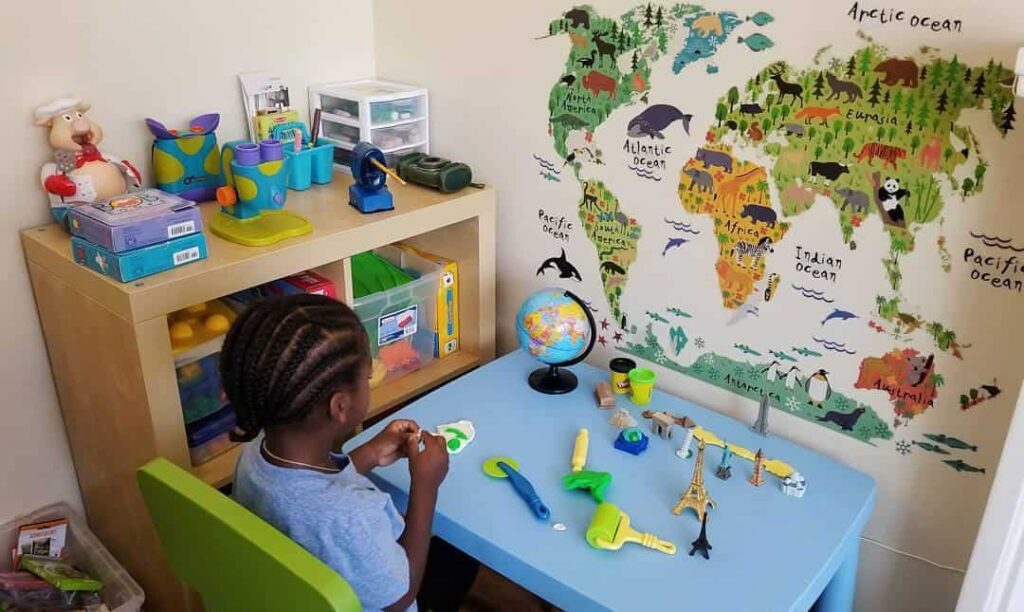
When our family made the decision to homeschool Aiden, we put a lot of thought into it. We discussed our goals and plans, and did lots of research as well, and finally decided that it was the right thing to do for him and for us. When making the choice to homeschool your children, take some time to think about the following below:
What Are Your Homeschooling Goals
Understand your goal of wanting to homeschool. There is a difference between wanting to homeschool and understanding your reason to actually homeschool. The want is great, but there also needs to be an end goal that you are striving for. Not only do goals help you stay on track, but they also keep you focused on the task at hand.
How Do You Plan To Homeschool
Create a plan that works well for you and your children. Will both parents be working, or will one need to stay home? One benefit of homeschooling is that you can alter your daily schedule so that it is beneficial for all involved. While there are benefits of having some flexibility, understand the importance of having a daily schedule in place. Structure is important when it comes to creating a positive homeschool learning environment. Even more important? Communicate the plan and day-to-day schedule with your children so they are aware as well. The more you communicate, the easier it is for everyone involved to be able to transition effectively and efficiently.
Have You Done Enough Research On Homeschooling
Research local resources in your city that you can lean on for support. Let’s face it, there may be times that we need help with homeschooling. It’s normal and okay to excel in different areas of education, and need a little boost in others. It is also at that point that you seek resources. Check with your local library as well as your local school district to see if there are resources available where you can connect with other homeschool parents in the area. There may be some great co-ops as well that you can network and connect with to find support and brainstorm thoughts and ideas. Let’s not forget, all homeschool groups on Facebook. Being surrounded by support from others who also homeschool, makes it so much easier.
 Make Sure To Discuss Homeschooling
Talk to your children and find out their thoughts and feelings about homeschooling. For a child, it can be a confusing time to really understand what homeschooling means. How do they envision it? Some children think of homeschooling as a way to NOT have to go to traditional school to be able to stay home and play the day away. While this sounds tempting, it just isn’t the reality. Introduce them to the world of homeschooling by having a “test” day at home where they can see the basic structure and outline for the day. Pick a weekend day, or a day when everyone is home, and set the day up in a similar structure to show how a homeschooling day would be. Have lesson plans prepared, teach the subjects on the schedule, serve lunch, and go through the entire day of what a basic homeschool day would entail. Think of how much more effective it is to show your child how homeschooling works rather than have to try to explain all the ins and outs that could happen. If you have been planning to homeschool before your children were off school age, then this will most likely be an easy transition for you.
Decide Whether To Homeschool Or Not
Make the decision to homeschool, or not based on the fundamentals of your family. If you envision that homeschooling will allow more family time, a creation of a stronger bond, and the ability to learn and grow together, then that sounds like a solid foundation to give homeschooling a try. Ultimately, the choice is up to you and what works best for your family.
When you finally decide that you want to homeschool or not, and it feels like the right decision for all involved, then that decision becomes a positive choice. There is no right or wrong answer, or a one size fits all solution for families when it comes to deciding if homeschooling is right for them. Understand your goals, your family’s needs and wants, and base your decision on those factors. Once you understand and see the positive outcome that can occur with homeschooling, you are already well on your way to long-term homeschool success!
 Our family made the decision to homeschool Aiden when he was about two years old. My husband and I attended traditional school, had amazing teachers along the way, and turned out fine of course. However, I really wanted us to be the one’s to educate Aiden. I have a Bachelor’s Degree in Child & Adolescent Development and a Master’s Degree in Family Services, which I felt would gave me the direction I needed to take on this task. At this time, my sister Ells was in the 10th grade in high school. We discussed several homeschooling options with her, but she ultimately decided that she would prefer to continue to attend public school, and we were just fine with that.
For those who plan to homeschool or already homeschooling; how did you make the decision to homeschool your children?