
We handed over the keys to our house, packed up our lives into a $14,000 RV found on Facebook Marketplace, and hit the open road to pay off debt while traveling across the country with our son.
Just eighteen(18) months down the line, we had eliminated $200,000 of debt, including $109,510 in student loans, all while exploring national parks and keeping up with homeschool lessons.
Many people assume debt free travel and family adventure cannot exist in the same reality, but our experience proves otherwise. Choosing travel while in debt does not force you to pick your bucket list over your bank balance.
In fact, paying off debt and traveling at the same time is completely doable when you have a clear plan in place, which is the exact setup we detail in How Are We Able to Afford Travel Life.
This is the story of how we pulled it off, including the step-by-step breakdown, the exact figures, the tools that kept us on track, and the missteps along the way.
Pay off debt while traveling?
- Turn debt payoff into your top monthly bill
- Downsize housing to erase your biggest expense
- Turn a side hustle into real travel income
- Automate payments with a zero-based budget
- Track every dollar with a real-time app
These five steps became the foundation for how we paid off debt while traveling without putting our lives on pause. The best part is that none of this required a massive income to get started.
Our first major change was treating our debt like a mandatory bill, not an afterthought. Every single month, a large debt payment was automatically pulled from our account before we even looked at our budget for groceries or entertainment. This simple shift sped up our timeline more than anything else we tried.
Next, we drastically downsized our living space. Selling our home in California and moving into the RV reduced our biggest monthly expense to practically zero. This freed up a huge amount of cash that used to vanish into a mortgage every thirty days.
Along the way, a blog we started as a fun hobby blossomed into a genuine stream of income. Through brand partnerships and sponsored posts, our household earnings eventually surpassed $300,000 a year. That extra money, rather than just sheer willpower, is what truly allowed us to pay off debt and travel at the same pace.
Finally, we adopted a zero-based budget so every single dollar had a specific purpose before the month even began. We also started tracking our daily spending instead of just guessing where our money went. Combined, these daily habits turned debt free travel from a catchy phrase into a solid, repeatable system.
The Exact System Step-by-Step
Wanting to pay off debt while traveling is one thing. But building a real financial freedom travel plan that gets you there is another. Here is the exact order we followed.
Step 1: Face the Real Numbers
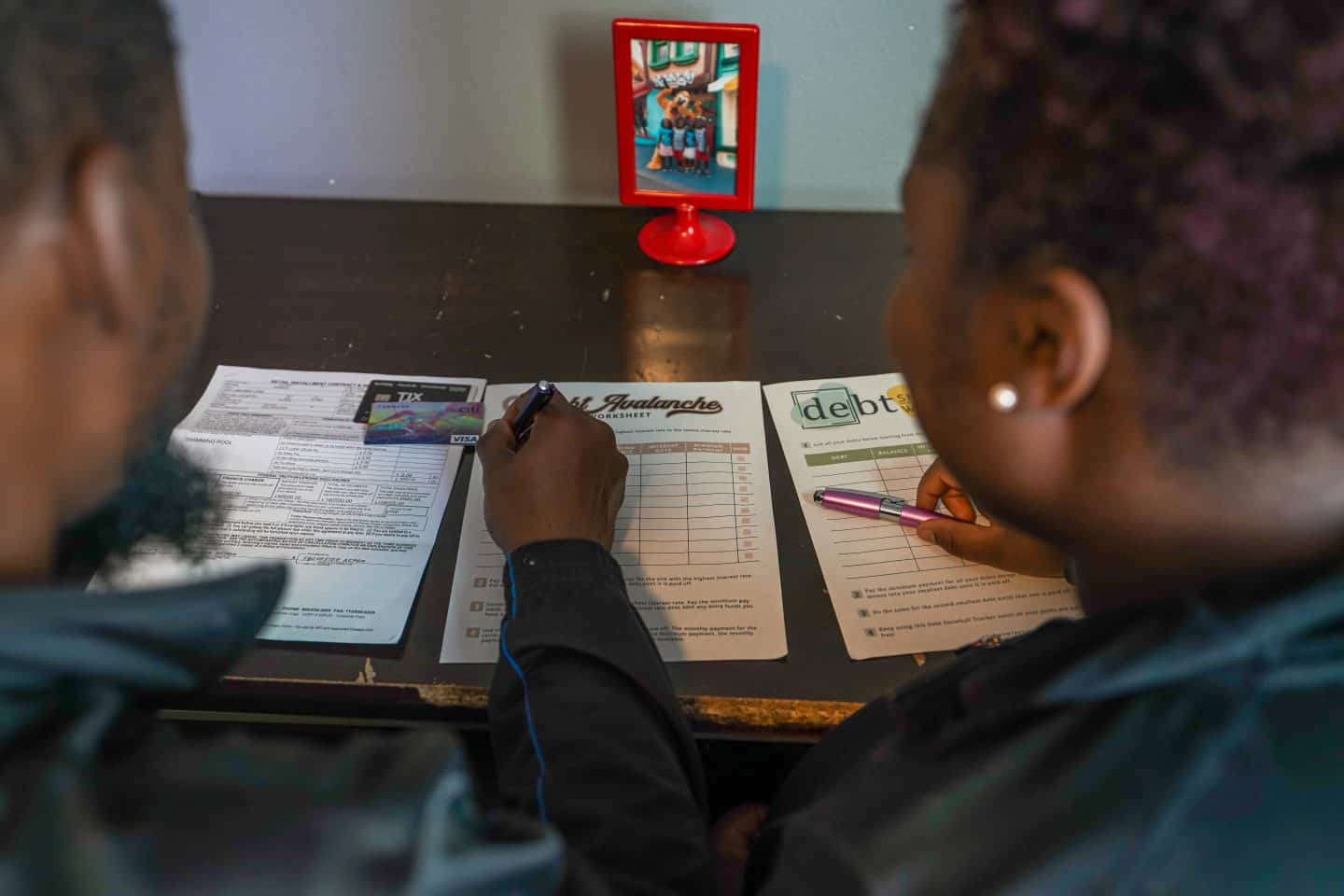
We listed every debt we owed, including my $69,510 in student loans and my husband’s $40,000, plus every other loan and card balance, putting us at roughly $200,000 combined. Uncomfortable, but you cannot pay off debt and travel with a plan built on guesses.
Step 2: Cut Housing to the Bone
Housing is the biggest line item in most family budgets, so it was the first thing we attacked. Selling our house and buying the RV for $14,000 instantly freed up thousands of dollars a month that used to go straight to a mortgage.
Step 3: Turn a Passion Into Income
Instead of treating the blog as a hobby, we treated it like a business. Pitching brands and reaching out for partnerships turned a side project into consistent monthly income we could throw at debt.
Step 4: Choose a Payoff Method and Automate It
Snowball or avalanche, pick one and automate the payments so willpower is never the deciding factor. My full breakdown of both approaches is in Paying Off Debt: The Debt Snowball vs Debt Avalanche Method, the blueprint behind our own debt snowball traveling plan.
Following this order is what let us pay off debt while traveling instead of pausing our lives for years first.
How much can a family realistically save?
- February 2020: sold the house, bought the RV
- December 2020: $109,510 in student loans gone
- 18 months total: $200,000 in debt paid off
- Blog income grew past $300,000 a year
- Biggest lever: turning housing costs into travel fuel
These milestones are the actual dates and exact numbers from our own journey, calculated in real time while raising our son on the road.
In February 2020, we made the bold decision to sell our house and move into an RV, which became the single biggest catalyst for everything that followed.
Eliminating our largest monthly expense gave us the leverage we needed to tackle our balances head-on rather than making tiny payments for ten years.
By December 2020, we reached a massive turning point when we officially cleared our combined student loans: $69,510 of mine and $40,000 of my husband’s. Just ten months after stepping away from traditional housing, that initial goal was fully realized.
That early success built momentum across all our remaining balances. Within 18 months of moving into the RV, we had wiped out $200,000 in total debt. The income from our blog, which eventually surged past $300,000 a year in revenue through brand collaborations, served as the primary engine behind that progress.
Recent findings from consumer research group Experian highlight that working-age adults carry the vast majority of personal debt today, which explains why drastically reducing our fixed living costs early on gave us such a powerful advantage.
Real Numbers From Our Family
Real numbers matter more than motivational quotes when you are trying to pay off debt while traveling with kids in tow. Here is exactly what ours looked like.
The Debt We Started With
Together, our balances reached nearly $200,000, which included $69,510 in my own student loans, $40,000 in my husband’s, and additional personal debt on top of that. None of it vanished overnight, and none of it was erased by chance.
The Housing Move That Changed Everything
We bought our RV for $14,000 off Facebook Marketplace in February 2020. A year later, we upgraded to a 42-foot 2021 Keystone Montana 385BR once we knew full-time RV life was sustainable for our family.
The Income Side of the Equation
Turning this blog into a real business is what funded the debt payoff without putting travel on pause. Annual gross income eventually grew past $300,000 through brand partnerships and sponsored content, a very different number than what we started with as two full-time employees.
The Travel That Kept Happening Anyway
Paying off debt did not mean staying home. We still found $14 flights to Florida, $40 round-trip flights to Chicago, $25 flights to Morocco, and $12 flights from Copenhagen to London. Those deals proved that travel while in debt is possible when you stay flexible on where and when you go.
What is the biggest money mistake families make?
- Treating travel savings as an afterthought
- Carrying credit card debt while booking trips
- Skipping a real budget before departure
- Ignoring high-interest debt for small wins
- Failing to track spending in real time
One thing I can say is that this list comes from my own experience, and I’ll tell you a few facts. Treating travel as an afterthought is the most common error.
If your travel savings only get whatever happens to be left over at the end of the month, there is rarely anything left. We now treat our travel fund like a mandatory bill that gets paid every single month, right after our living expenses.
Carrying credit card debt while booking trips is a close second. Doing this makes it nearly impossible to qualify for the travel rewards cards that actually make points and miles worthwhile.
Fidelity’s comparison of debt payoff strategies explains that the avalanche method targets the highest interest rate first while the debt snowball method starts with the smallest balance, and either approach beats making minimum payments while continuing to charge vacations on credit cards.
Skipping a real budget, ignoring high-interest balances in favor of small wins, and failing to track spending daily round out the list. Each one alone can slow you down, but together, they are usually the main reason families feel stuck instead of making real progress.
Tools and Apps That Help
Interestingly, you don’t need a finance degree to pay off debt while traveling. Once you find a system, the right app makes that system easier to stick to.
1. Zero-Based Budgeting
You can always rely on YNAB to give every dollar a job before the month starts. The system forces a clear plan for debt payments, bills, and the travel fund before a single dollar gets spent, keeping a family on track instead of drifting.
2. Round-Up Savings Apps
Qapital and Acorns both round up everyday purchases and move the spare change into savings automatically. Neither will pay off a five-figure debt on its own, but both help build the emergency fund that keeps you from reaching for a credit card.
3. Free Budget Tracking
Rocket Money gives you free tools alongside paid features, and it is a solid starting point for visibility into recurring subscriptions you may have forgotten you were even paying for. Canceling a few we had forgotten about freed up real money every single month, money that went straight toward debt instead.
4. The 50/30/20 Framework
We also lean on the 50/30/20 rule as a gut check, allocating 50 percent of income toward needs, 30 percent toward wants, and 20 percent toward savings or debt payoff. It serves as a flexible guideline and a useful starting point for figuring out how much room you have to pay off debt and travel at the same time.
Mistakes That Set You Back
Even with the right tools and the right system, a few habits can quietly undo months of progress toward paying off debt and traveling.
1. Ignoring Small Debts Because They Feel Manageable
Small debts usually get ignored because the minimum payment feels easy to absorb. That debt still carries interest, though, and letting it linger for years usually costs more in the long run than it feels like it should.
2. Upgrading Your Lifestyle Too Early
Once one debt is gone, it is tempting to loosen up immediately. A better move is staying lean for a few more months and directing that freed-up money toward the next debt or the travel fund instead of new spending.
3. Comparing Your Timeline to Someone Else’s
Forbes Advisor’s data on average consumer debt shows that balances vary widely by generation and household, so a family with less debt or higher income will naturally hit milestones faster.
Also, comparing your own progress to a stranger’s timeline online is a fast way to feel discouraged for no good reason.
4. Forgetting Why You Started
It is easy to get so deep into spreadsheets that the actual goal, more time together and more time on the road, gets lost. Keeping a reminder of what the debt payoff is actually funding, whether that is a photo, a map, or a trip on the calendar, helps the whole plan feel worth it.
Frequently Asked Questions About Paying Off Debt While Traveling
1. How long until you see results?
Most families notice a shift within the first two or three months of automating payments and cutting one major fixed cost like housing. Our biggest milestone, $109,510 in combined student loans, took about ten months after we sold our house and downsized into the RV.
2. Does this work on one income?
Yes, as long as fixed costs come down first. The key is combining a lower cost of living, like RV life, with a flexible income stream so the household is not relying on a single paycheck to cover everything at once.
3. What if you have debt?
Having debt does not mean travel has to stop. It means being intentional: automate minimum payments, choose a payoff method, and build a smaller travel fund around trips that fit a tighter budget while the debt shrinks in the background.
4. Which app/tool does Kay actually use?
YNAB is the budgeting app at the center of our system, paired with Qapital and Acorns for automatic savings and Rocket Money for recurring subscriptions. None of them replace a plan, but all of them make the plan easier to follow.
5. Is this realistic with young kids?
Yes, we did this while homeschooling and traveling with our son. Kids add real costs, but they also make you more motivated to build a sustainable system rather than a short-term fix, since the goal is a lifestyle that lasts, not a single trip.
Wrapping Up
So what’s the key takeaway? I mean, months with $200,000 in debt and a lot of very cheap flights later, our family proved you really can pay off debt while traveling instead of choosing one over the other.
Remember, it takes a real system to automate debt payments, cut the highest fixed cost first, and turn your skill or side hustle into real income.
If this breakdown helped, save this post so you can come back when you are ready to build your own plan. Don’t forget to join our newsletter for more helpful guides like this one, sent straight to your inbox.
Book Your Trip: Logistical Tips and Tricks
Book Your Flight
Find the best flight deals with Skyscanner. It searches airlines and travel sites around the world so you can compare routes, schedules, and prices in one place.
Book Your Accommodation
Book family-friendly hotels, apartments, resorts, and vacation rentals with Booking.com. It’s an easy way to compare accommodations and find the right fit for your family and budget.
Don’t Forget Travel Insurance
Travel insurance can help protect your trip in case of unexpected delays, cancellations, lost luggage, or medical emergencies. Before your next international trip, check Nomad Insurance for coverage options.
Want to Travel for Free?
Travel credit cards can help you earn points and miles that can be redeemed for flights, hotels, and other travel expenses. Check out my recommended travel credit card resources to start making your travel budget go further.
Need a Rental Car?
Use Discover Cars to compare rental car options and find competitive rates worldwide. It’s a simple way to compare prices and find the best option for your trip.
Need Help Finding Activities for Your Trip?
Viator makes it easy to discover tours, attractions, day trips, and local experiences. Whether you’re looking for family-friendly activities or unique adventures, you’ll find plenty of options to enhance your trip.
Shopping for Travel Essentials?
From packing organizers and travel gear to family travel must-haves, you can find many of my favorite travel essentials on Amazon.
Ready to Book Your Trip?
If you’d like extra support planning your next adventure, explore curated travel experiences through Rooted Journeys, where we help families discover meaningful and memorable travel experiences around the world.


